How to Tell If a Pickleball Paddle Is a Scam: 7 Consumer‑Grade Checks
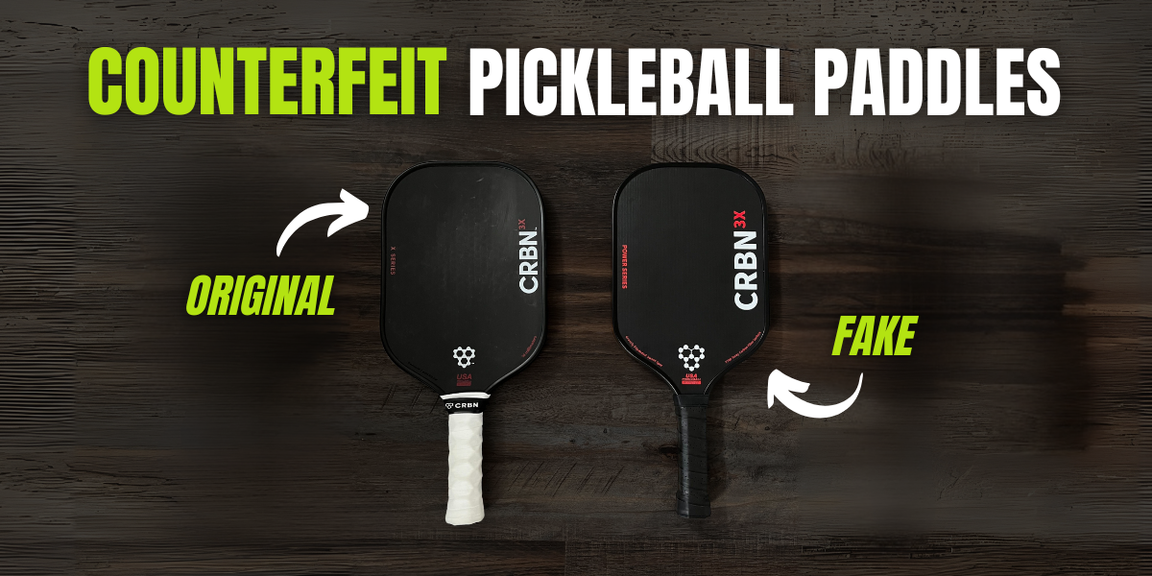
Pickleball’s explosion in popularity has brought a dark side: counterfeit paddles. Fake Selkirk, JOOLA, Franklin, and other top‑brand paddles are flooding Amazon, eBay, Facebook Marketplace, and discount websites. These knockoffs not only waste your money—they can have inconsistent weight, poor grip, and even dangerous edge guard defects.
But most online advice misses the mark. You’ll find guides written for retailers (“verify your supply chain”) or brand owners (“protect your IP”). This guide is written for you, the buyer. Use these 7 consumer‑grade checks to spot a scam before you buy—and to get your money back if you’ve already been tricked.
What you’ll learn:
- 3 seller red flags that scream “scam”
- A 60‑second visual inspection for any paddle
- How to verify USAPA approval in 2 minutes
- What to do if you already bought a fake
Before You Buy – 3 Red Flags That Scream “Scam Seller”
Most paddle scams start with a dishonest seller, not a bad paddle. Here’s how to spot them before you click “Buy Now.”
1. Price That Defies Basic Economics
A legitimate $150+ paddle (Selkirk Power Air, JOOLA Ben Johns Hyperion, etc.) never sells for $40 new. Scammers love the “wholesale closeout” or “overstock” lie.
The rule: If a current‑model top‑brand paddle is discounted more than 40% from MSRP and sold by a non‑authorized dealer, it’s almost certainly a scam.
Action: Look up the official MSRP on the brand’s website. If the deal is too good to be true, it is.
The price-check advice still holds, but if you’re looking for a high-performing paddle without the premium price tag, some direct-to-consumer brands prove that value and quality can coexist. A great example is the 2026 Friday Aura Pro, which delivers impressive spin rates around 2,200–2,400 RPM for roughly $160—well below the cost of most elite-tier paddles. For a closer look at how these kinds of paddles perform, you can check out this hands-on review.
2. Seller Has Zero Verifiable History
On Amazon, a scam storefront often appears as “Just Launched,” with a generic name (e.g., “BestDeals4You”) and only one or two products. On eBay, the seller may have 0 feedback or private feedback history.
Safe threshold: At least 6 months of selling history + 50+ positive ratings.
Red flags: No reviews, reviews that all sound identical, or a sudden launch of high‑end paddles at 70% off.
3. Urgency Tactics + Stock Photos Only
Scammers use timers: “Only 2 left!” But they never show real photos of the paddle. Instead, they steal watermarked images from official brand sites or use generic factory photos.
Action: Do a reverse image search (Google Images or TinEye) on the listing photo. If it appears on AliExpress, Alibaba, or dozens of unrelated websites, you’re looking at a scam. Also, search for the seller’s store name + “scam” – you’ll often find warnings. FTC warning signs of fake online stores.
After You Receive the Paddle – The 60‑Second Visual Inspection
You bought it. Now open the box. These four physical checks take less than a minute and catch 90% of counterfeits.
4. The Logo & Label Test
Compare the paddle in your hand to the official brand photo from the manufacturer’s website (not a stock photo from the listing).
Counterfeit tells:
- Misspelled brand name (e.g., Selkirk → Selkirrk / Selkirkk)
- Blurry, raised, or peeling screen print (real logos are smooth and embedded)
- Wrong font on the “USAPA Approved” stamp
- Missing or oddly placed model name
Real paddles from top brands have flawless print quality. If the logo looks cheap, the paddle is cheap—and fake.
5. The Weight & Balance Check
Authentic paddles weigh between 7.5 and 8.5 ounces (most are 7.8–8.2). Counterfeits often use inconsistent foam cores, leading to abnormal weight or poor balance.
Don’t have a scale? Try the finger balance test:
Balance the paddle on your index finger at the exact center of the face. A real paddle stays nearly level. A fake often tilts dramatically toward the handle (head‑light) or the tip (head‑heavy).
Why it matters: Poor balance affects your swing and can cause wrist strain. No legitimate brand sells an unbalanced paddle.
6. The Edge Guard & Grip Test
Edge guard:
- Real – smooth, continuous, with no gaps or glue residue.
- Fake – rough seams, visible glue, wavy or uneven line where it meets the face.
Grip:
- Real – snug, even wrap, with a branded end cap (butt cap) that’s firmly attached.
- Fake – loose wrap that shifts when you squeeze, cheap foam feel, unbranded or misprinted butt cap, visible tape at the top.
Run your fingernail along the edge guard seam. If it catches on glue or a gap, be suspicious.
The Definitive Check – USAPA Approval & Serial Number Lookup
This is the closest thing to a “silver bullet” for spotting fake paddles. Many counterfeits copy a valid USAPA stamp from a different model. You need to verify.
Step 1 – Find the USAPA stamp on the paddle face
Most legitimate paddles have a small stamp that says “USAPA Approved” along with the exact model name (e.g., “Selkirk Vanguard 2.0”).
Red flag: The stamp exists, but the model name is generic or missing.
Step 2 – Cross‑reference on the official USAPA list
Open a new tab and go to usapickleball.org → Equipment → Approved Paddle List.
Search by brand, then scroll to the model name printed on your paddle.
- If the model is NOT on the list → 100% scam (even if the stamp looks real).
- If the model IS on the list → good sign, but still check Step 3.
Pro tip: Scammers sometimes steal a model name that is on the list (e.g., “JOOLA Hyperion CFS 16”). In that case, proceed to the brand’s serial number check.
Step 3 – Serial number check (if available)
Top brands (Selkirk, JOOLA, Gearbox, and Franklin) offer a serial number lookup on their official websites.
- Look for a sticker or engraved number on the paddle’s edge or handle.
- Enter that number on the brand’s “Warranty Registration” or “Authenticity Check” page.
- If the number is invalid, missing, or already registered to another user → counterfeit.
What to Do If You’ve Already Bought a Scam Paddle – Recovery Steps
You followed the checks above and realized you got a fake. Don’t panic. Most buyers can get a full refund if they act quickly.
Step 1 – Document Everything
Before contacting anyone, collect evidence:
- Screenshots of the listing (price, seller name, description, photos)
- Screenshot of your order confirmation (date, amount, order number)
- Clear photos of the fake paddle – logo, edge guard, USAPA stamp, serial number area
- If possible, a video showing poor balance or loose grip
Step 2 – Contact the Seller for a Refund
Use the platform’s messaging system (Amazon, eBay, etc.) – never go off‑platform.
State clearly: “The paddle I received is counterfeit. The USAPA model is not on the approved list, and the [logo / weight / edge guard] does not match the official product. I request a full refund including shipping.”
Do not accept a “partial refund” or “keep the paddle and we’ll give you 20% back.” Scammers use this to close your case.
Step 3 – Escalate to Payment Protection
If the seller refuses or ignores you, escalate within 60–120 days (depending on your payment method).
- Credit card: Call your issuer. File a chargeback under “Item not as described – counterfeit.” Most cards give you 120 days from the purchase date.
- PayPal: Open a dispute under “Significantly not as described.” You have 180 days.
- Debit card: Harder, but try your bank’s fraud department.
Pro tip: Upload your documentation (screenshots + photos) directly to the dispute. Use the word “counterfeit” – it triggers stronger consumer protections.
Step 4 – Report the Scam
Help other buyers avoid the same trap:
- Report the seller to the marketplace (Amazon’s “Report a violation,” eBay’s “Report this item”).
- Leave a detailed 1‑star review on the product page – mention that it’s counterfeit and why.
- Optional but helpful: File a complaint with the FTC at ReportFraud.ftc.gov.
Where to Buy Safely – A Simple Green‑Light Checklist
Skip the detective work next time by buying only from trusted sources. Bookmark this list.
 Authorized dealers only – Go to the brand’s official website and click “Where to Buy.” Those are the only sellers you can trust.
- Major pickleball retailers – PickleballCentral, TotalPickleball, JustPaddles, PickleballGalaxy.
- Big‑box sporting goods – DICK’S Sporting Goods, Scheels, Academy Sports.
- Amazon safe rule – Only buy if the Sold by line says “Amazon.com” or the brand’s official store (e.g., “Selkirk Sport”). Avoid third‑party sellers with weird store names.
- eBay safe rule – Look for “Top Rated Plus” and sellers with 99%+ positive feedback over at least 1 year. Always ask for a photo of the serial number before paying.
- Price sanity check – If a new, current‑model top paddle is under $50, it’s a scam. Period.
Conclusion – Trust Your Eyes & The Checklist
You don’t need to be a pickleball expert to spot a fake paddle. The 7 checks in this guide – seller behavior, logo quality, weight balance, edge guard, grip, USAPA lookup, and serial number verification – will catch 99% of scams.
One last reminder: If a deal feels too good to be true, it’s a counterfeit. Legitimate paddles rarely go on deep discount unless discontinued, and even then, only from authorized dealers.
Bookmark this guide. Next time you see a suspicious paddle sale, run through the 60‑second checklist before you click “Buy.” Your wallet – and your game – will thank you.
Have you been scammed? Share your story in the comments to help others. Or, contact your payment provider today – most people wait too long and lose their right to a chargeback.
Comments
Post a Comment